Handling Work Refusals and Avoiding Reprisal Complaints
Date: March 27th, 2019 Speakers: Ryan Conlin & Frank Portman [...]
Date: March 27th, 2019 Speakers: Ryan Conlin & Frank Portman [...]
Date: December 19, 2018 Time: 9 - 10:30 AM PST [...]

March 27th, 2019 | One of the most powerful protections for employees under the Occupational Health and Safety Act is the right to refuse unsafe work. While the right to refuse unsafe work has proven to be an essential element of safeguarding workplace safety, it has also been improperly used as a tool for other, non-safety related ends by employees and organized labour. Employers must navigate these treacherous waters, ensuring that legitimate work refusals are dealt with appropriately, while preventing abuse of this significant power.
SEASONAL SAFETY Don’t Blow Off Snowblower Hazards If you have [...]
According to the National Institute for Occupational Safety and Health, [...]
It can be tricky dealing with the various personality types, [...]
Defining the Problem In a 2013 webinar former, OSHA administrator [...]

Slips, trips and falls are among the leading causes of workplace injuries. They occur when housekeeping procedures aren’t followed and enforced, when you rush or fail to pay attention to what you’re doing and where you’re walking, when you don’t wear the right kind of footwear, and when stairways, parking lots, and other walking and working surfaces aren’t well-maintained.
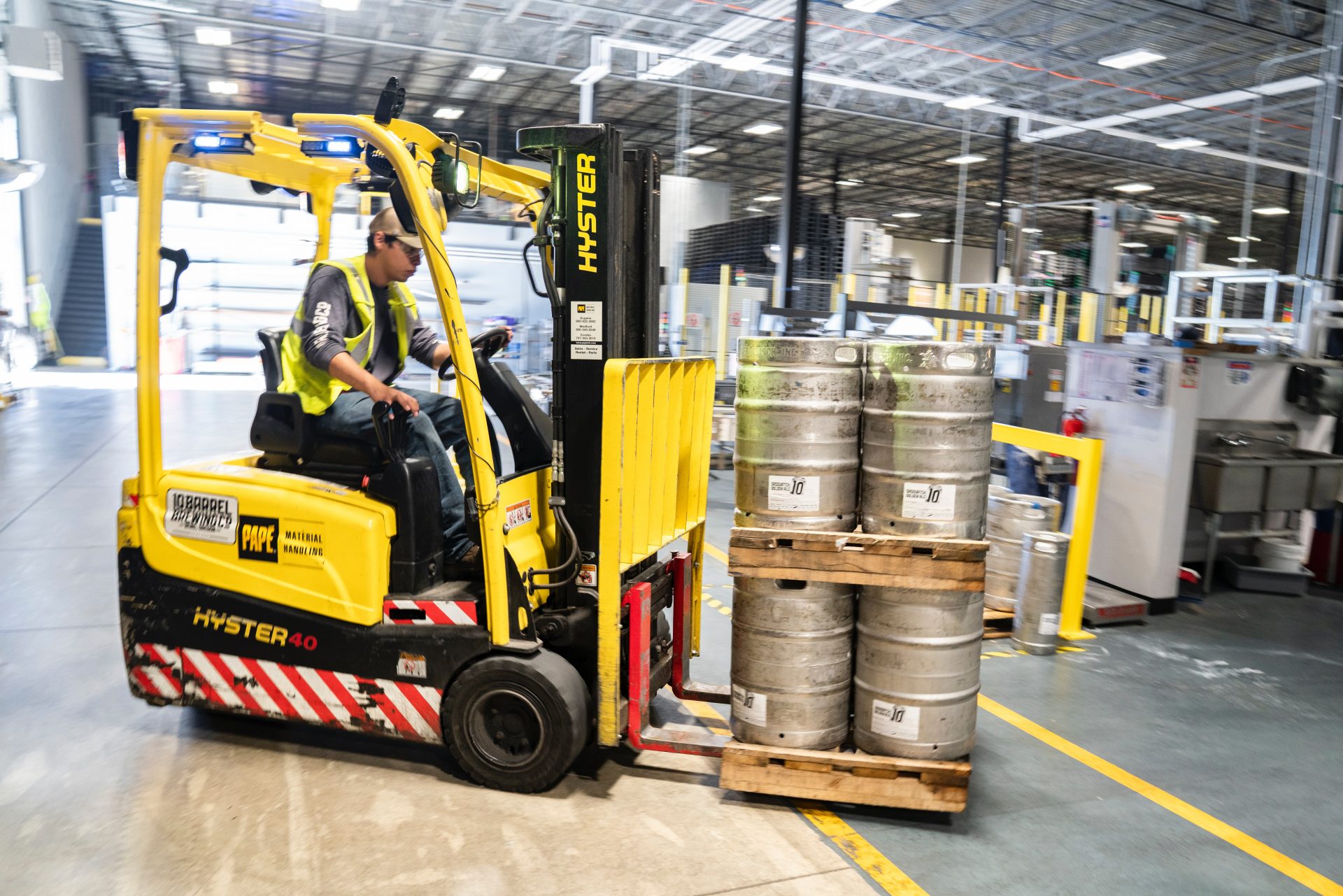
Machines have all but replaced muscle power in modern industrial society. Forklifts are a prime example. Forklifts are utilized just about everywhere material needs to be moved.
Chemicals can cause burns to eyes, skin, and internally if swallowed or inhaled. Chemical burns can be deceiving with some chemicals causing damage deep within body tissue. The amount of damage a chemical can cause depends on many factors including the chemical, its strength, whether it was inhaled or swallowed and the time it was in contact with body tissues.

Fire, natural disaster, and other emergencies can strike your workplace without warning at any time. While you can’t predict them, you can prepare for them and preparedness save lives, prevent injuries and limits property damage. If that’s not motivation enough, being prepared for workplace emergencies may save your business thousands and even hundreds of thousands in safety fines avoided.
Most workplaces in Canada and the U.S. are required or voluntarily have safety committees, or Joint Health and Safety Committees (JHSC). A safety committee or JHSC is made up of worker and management representatives that meet on a regular basis to discuss and deal with health and safety issues.
Loading and unloading of forklifts and other trucks are subject to specific safety requirements that are designed to ensure stability of loads and prevent harm to operators and others nearby. This form helps prevent these related injuries and incidents from happening, along with consequential safety violations and citations
Once they’re on the move, forklifts and other powered industrial trucks become dangerous and subject to specific travel safety rules. This form helps prevent these related injuries and incidents from happening, along with consequential safety violations and citations.
It takes a split-second of inattention, a slight change in working conditions, a forgetful co-worker, or a lax safety program for you to fall through an opening.
This program utilizes video shot on location as well as [...]
This program utilizes video shot on location as well as 3D animations to train new or experienced employees in the importance of safe operation and the responsibilities of professional lift truck operations, and the skills and techniques operators can use to help ensure workplace safety and incident prevention. Anyone required to operate forklifts must be trained in accordance with mandated standards. Training must include a wide variety of topics including engineering principles, forklift operating rules, equipment characteristics, differences between a forklift and a car, environmental hazards, operator maintenance, hazardous locations, surface operating conditions, site-specific operations, potential hazards, and other pertinent information. This video does just that and is a great training aid for training new operators or as refresher training for experienced operators.

In today's litigious society, we begin to take cautions, warnings and disclaimers from manufacturers' with a touch of skepticism or disregard. When it comes to hazardous chemicals in the work place, words, colors and symbols mean something. Not only is it your workers' right, it is their responsibility to know what they mean. This program will teach your employees to recognize and understand the different means of communication used to identify hazardous chemicals including the United Nation's new Globally Harmonized System. The training program will educate your workers on the physical characteristics and chemical properties communicated in the material safety data sheets and on the container labels enabling them to make proper decisions concerning the safe use handling and storage of the substances. The program covers the purpose and role of hazard communication, the different classification of chemicals and their hazards, the primary forms of communication, and best practices and procedures to ensure their safety and health. Chemicals are an intricate and valuable part of our life. When respected and handled properly, they pose minimum risk our safety and health. Knowledge is a valuable safety tool. Not only is it your workers' right to know, it is their responsibility to use it to protect their safety and that of their co-workers.

In today's litigious society, we begin to take cautions, warnings and disclaimers from manufacturers' with a touch of skepticism or disregard. When it comes to hazardous chemicals in the work place, words, colors and symbols mean something. Not only is it your workers' right, it is their responsibility to know what they mean. This program will teach your employees to recognize and understand the different means of communication used to identify hazardous chemicals including the United Nation's new Globally Harmonized System. The training program will educate your workers on the physical characteristics and chemical properties communicated in the material safety data sheets and on the container labels enabling them to make proper decisions concerning the safe use handling and storage of the substances. The program covers the purpose and role of hazard communication, the different classification of chemicals and their hazards, the primary forms of communication, and best practices and procedures to ensure their safety and health. Chemicals are an intricate and valuable part of our life. When respected and handled properly, they pose minimum risk our safety and health. Knowledge is a valuable safety tool. Not only is it your workers' right to know, it is their responsibility to use it to protect their safety and that of their co-workers.
Carpal Tunnel Syndrome, or CTS, is nerve damage in your hand that’s caused by repetitive motions, such as using tools or a computer keyboard.
A burn means more than the burning sensation associated with this injury. Burns cause skin damage because the skin cells die. Burns can happen at work and outside of work. In fact, burns are one of the most common household injuries, especially among children.
With hectic schedules, the electric glowing light of our phones [...]
Poisoning, accidental or intentional, causes significant harm or death to many US and Canadian people. Poisoning takes many forms as harmful chemicals can be breathed in, swallowed, touched or injected.
An electrical burn occurs when skin meets an electrical voltage. It does not always leave a significant burn to the skin, but the electricity can cause significant internal damage to nerves, muscles and internal organs.
Sexual harassment is defined as any conduct, comment, gesture, or contact of a sexual nature that is likely to cause offence or humiliation to any employee; or that might, on reasonable grounds, be perceived by that employee as placing a condition of a sexual nature on employment or on any opportunity for training or promotion.
Phone Number: 800.774.2755
Fax: 800.326.2864
Email: support@coactionspecialty.com
Coaction Specialty Insurance
412 Mount Kemble Ave.
Morristown, NJ 07960
Report the loss as soon as possible to claims@coactionspecialty.com or call 800.774.2755 (Option #1 for reporting a new claim, Option #2 for all other existing claims).
Immediately. When filing a claim, notify Coaction by contacting us either via email at claims@coactionspecialty.com, by phone at 800.774.2755 (Option #1 for reporting a new claim, Option #2 for all other existing claims) or fax 800.326.2864.

Terms of Use | Legal Notice & Privacy Policy
Copyright 2020 SafetyNow ILT – a product of Bongarde Media