
Disaster Response Keeping Responders Safe – Spanish
En las secuelas de un desastre natural como un huracán, [...]
En las secuelas de un desastre natural como un huracán, [...]
Four-year-old Tylerann Zadroga lost her mother in 2004 and now [...]

DID YOU KNOW? In 2015, 18% of 477 HSA workplace [...]

This section addresses issues and regulations as well as planning [...]
This section addresses the purpose and employer responsibilities of an [...]
This section addresses emergency action plans also known as EAP’s, [...]

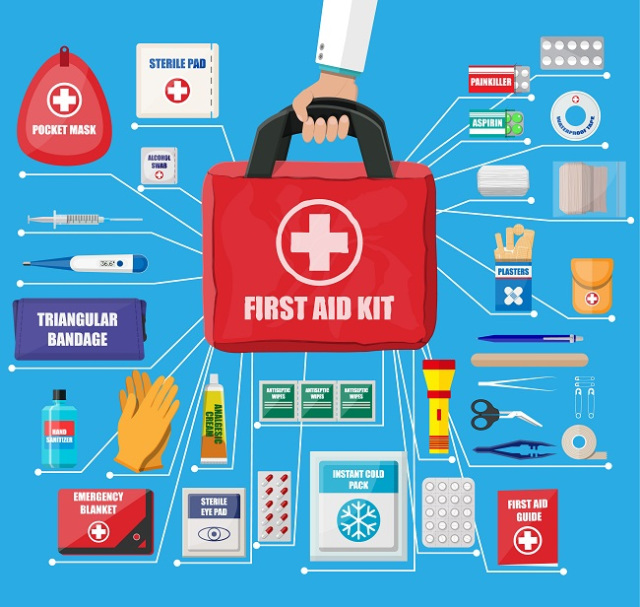
Information about assembling an emergency kit geared for peoples with [...]
How to respond if your vehicle is ever on fire. [...]

INCIDENT January 20th, 2020 VINELAND, N.J. (AP) — A Philadelphia [...]
INCIDENT STILLWATER, N.J. – Two people are dead after a [...]
Emergency situations; readiness; training. Emergency equipment; power supply; maintenance. Emergency [...]
Preparedness; save lives; confusion Prevent injuries; uncertainty; emergencies; Prevent injuries; [...]
The first thing you need to do to safeguard your [...]

This video is the perfect way to introduce new employees to general occupational hazards to which they may be exposed and to re-train experienced workers. Program includes basic safety rules, electrical hazards, powered equipment and machinery, back injury prevention, fire protection and more.
Information about assembling an emergency kit geared for peoples with [...]

Download Instructor-Led Material Meeting Kit PowerPoint Safety Talk ¿QUE ESTÁ [...]

Fire, natural disaster, and other emergencies can strike your workplace without warning at any time. While you can’t predict them, you can prepare for them and preparedness save lives, prevent injuries and limits property damage. If that’s not motivation enough, being prepared for workplace emergencies may save your business thousands and even hundreds of thousands in safety fines avoided.
An OSHA safety inspection resulted in citations for 34 serious [...]
You can't always believe what you read, especially when a sign points the way to an emergency telephone that doesn't exist.

We don't know how fond forklift operator Tomasz Wiszniewski is of cheese, but he could be forgiven for liking it a little less after becoming trapped under 55,000 tonnes of the stuff when 18-metre (60-foot) high shelving collapsed at a food distribution warehouse in Hinstock, England.
OSHA inspected an ice manufacturer and issued citations for 20 [...]
(13 Minutes)
This program explains how to prepare for earth quakes, tornadoes, hurricanes, and other emergencies at work. Designed to property damage and prevent injuries during emergencies.
This video is the perfect way to introduce new employees to general occupational hazards to which they may be exposed and to re-train experienced workers. Program includes basic safety rules, electrical hazards, powered equipment and machinery, back injury prevention, fire protection and more.
(15 Minutes)
Earthquakes, like tornadoes and hurricanes, hit with little or no warning. Being properly prepared can make all the difference in how you and your workplace are affected. This program teaches you how to prepare for the emergencies, from storing supplies and earthquake-proofing your environment to training your employees in all emergency and evacuation procedures. Learn how to greatly reduce the impact of earthquakes, or any natural disaster.
(12 minutes)
Phone Number: 800.774.2755
Fax: 800.326.2864
Email: support@coactionspecialty.com
Coaction Specialty Insurance
412 Mount Kemble Ave.
Morristown, NJ 07960
Report the loss as soon as possible to claims@coactionspecialty.com or call 800.774.2755 (Option #1 for reporting a new claim, Option #2 for all other existing claims).
Immediately. When filing a claim, notify Coaction by contacting us either via email at claims@coactionspecialty.com, by phone at 800.774.2755 (Option #1 for reporting a new claim, Option #2 for all other existing claims) or fax 800.326.2864.

Terms of Use | Legal Notice & Privacy Policy
Copyright 2020 SafetyNow ILT – a product of Bongarde Media